
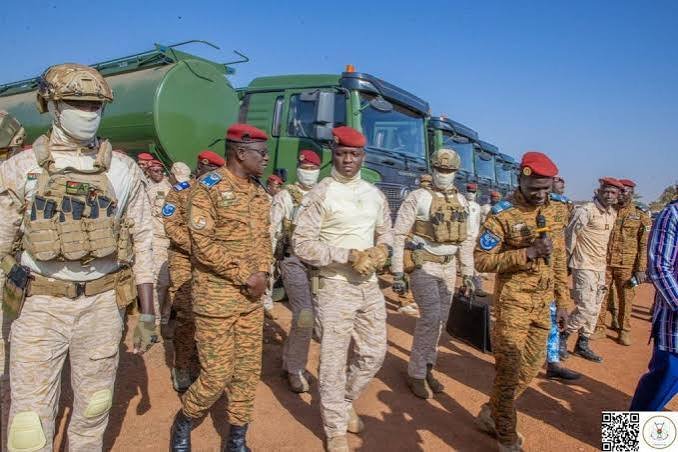
Captain Ibrahim Traoré has now given a new direction to Burkina Faso’s National Armed Forces. Faced with the terrorist threat, the army has acquired increased resources, a doctrine of reconquest of the territory and a defense vision based on the country’s strategic autonomy.
This buildup in troop numbers reflects a desire to make the defense of the territory everyone’s business.
The army is no longer limited to barracks and regular units; it now relies on a broader popular base, engaged alongside regular forces in protecting the country.
One of the major changes in recent years has been the expansion of the national defense system.
In addition to the regular armed forces, the country has mobilized about 90,000 Volunteers for the Defense of the Homeland (VDP), according to official figures.
A military reserve of 100,000 men is also being formed in order to strengthen the Nation’s mobilization capacity when needed.
The other major transformation concerns equipment. The era when soldiers had to take turns using a single weapon after a mission is now a thing of the past.
Each fighter, whether a regular soldier or a volunteer, now has the equipment needed to carry out their mission.
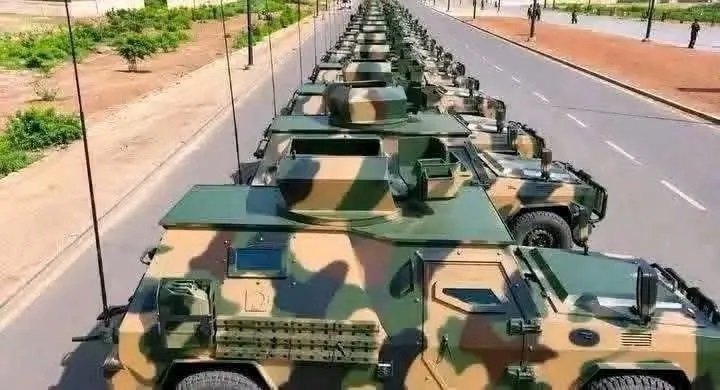
The arsenal of the National Armed Forces has been considerably enriched in recent years.
Armored vehicles, reconnaissance and strike drones, air defense systems and other latest-generation equipment have been integrated into the units.
This modernization allows Burkinabe forces to conduct more complex, more mobile and better-coordinated operations on the ground.
Beyond material resources, an entire military doctrine has evolved. Burkinabe forces no longer content themselves with defending positions.
They now carry out offensive operations to reconquer the territory, planned and executed by strategists within the army.
This methodical approach aims to regain control of areas once under terrorist influence, secure strategic axes and restore the State’s presence in liberated localities.
It reflects renewed confidence in the national forces’ ability to meet security challenges without depending excessively on external assistance.
As a reminder, since Captain Ibrahim Traoré came to power, Burkina Faso has chosen to diversify its partnerships and prioritize strategic autonomy.
The country now intends to rely first and foremost on its own forces, while retaining the possibility of cooperating with partners chosen according to its national interests.
This profound transformation of the Burkinabe army is part of a broader vision: that of reconquered and assumed national sovereignty.
The new page in the country’s military history is thus being written under the sign of modernization, endogenous capacity and self-confidence.
A strong, popular and sovereign army, ready to meet the challenges of defending the Homeland.
À propos de l'auteur