
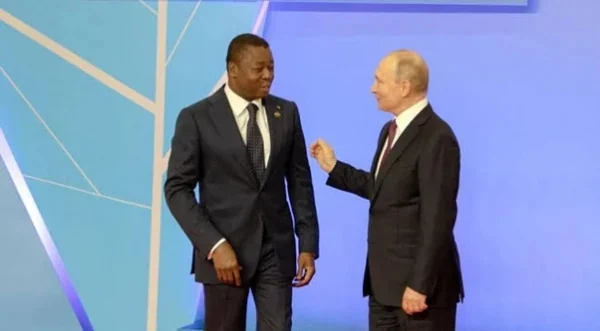
Faure Gnassingbé did not travel to Moscow to fill a diplomatic photo album or join the grand ballet of statements of intent. As Africa seeks to redefine the grammar of its strategic alliances, the Togolese president used the third Russia-Africa Economic and Humanitarian Forum to set a fundamental demand: operational pragmatism.
Rejecting empty rhetoric, Gnassingbé pushed a targeted agenda focused on energy, industrial transformation and agriculture signalling a foreign policy free from passive representation.
The diplomatic push fits a methodical vision of Togo’s role among nations. By calling for a partnership based on productive investment and real technology transfers, Lomé aligns with an Africa determined to be an actor in its own development.
The orientation set in Moscow reflects a broader repositioning in which economic sovereignty becomes the cornerstone of political action.
The agreements and memoranda signed in the Russian capital point to a diplomacy with immediate impact, structured around national development priorities.
By connecting the country’s infrastructure needs to global technological innovation, Gnassingbé is turning diplomacy into a direct lever for modernisation.
This unapologetic pragmatism is redrawing Lomé’s posture on the international stage, confirming that contemporary leadership is now measured by the speed at which strategic alliances are turned into concrete results.
Messan YOVO
À propos de l'auteur