
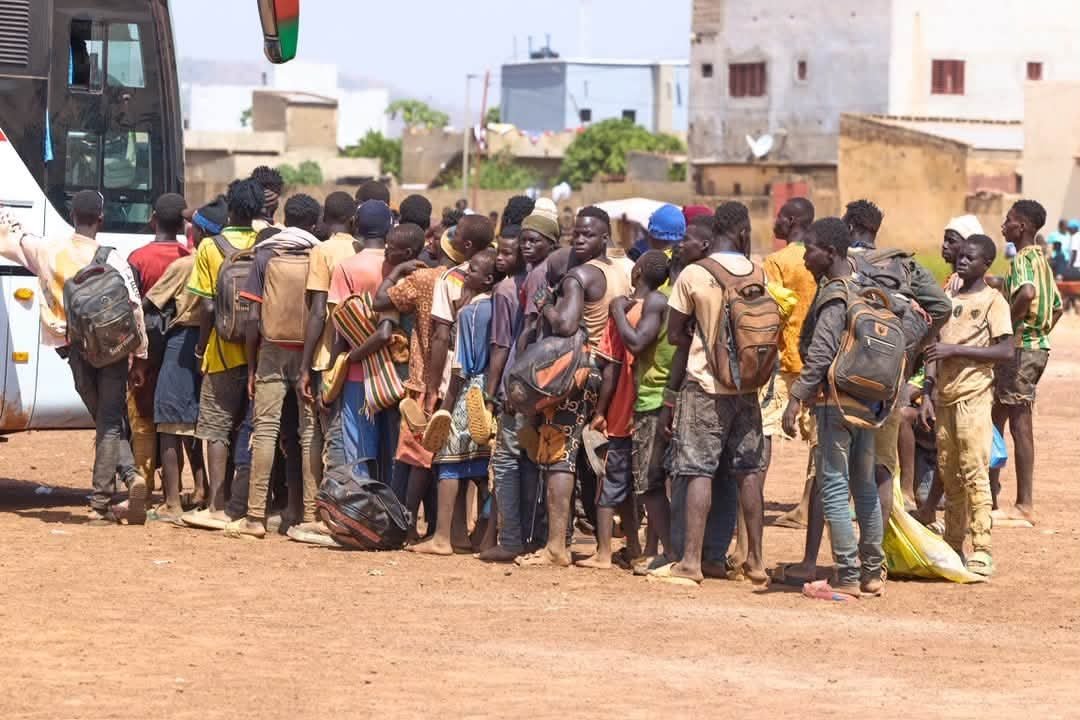
The Burkinabe government announced in a statement dated November 20, 2026, the end of operations to repatriate its nationals expelled from artisanal gold-mining areas in the Republic of Guinea.
These mass returns follow measures banning illegal gold mining, which came into force on November 2, 2026.
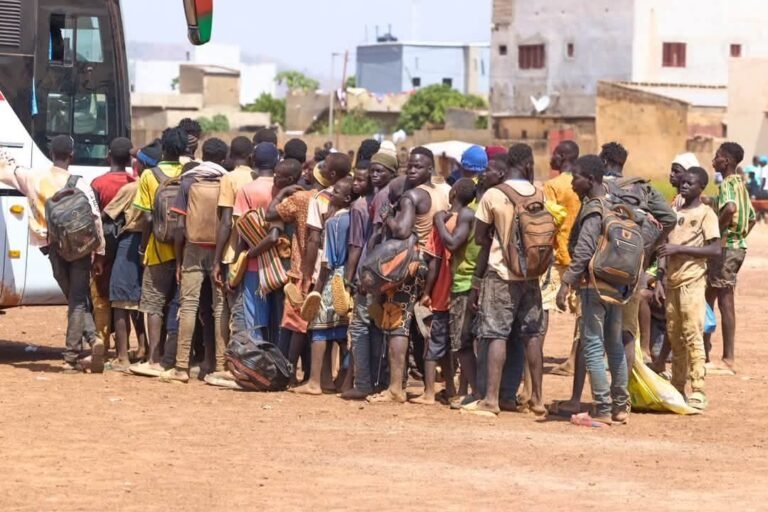
By November 18, 2026, a total of 76,169 people had been brought back to Burkina Faso. Among them were 74,452 men, 1,717 women and 15,968 children.
These figures reflect the scale of the repatriation operation undertaken by the Burkinabè authorities. They also demonstrate the State’s capacity to quickly mobilize the necessary resources to receive and care for its nationals in dignified conditions.
In addition to Burkinabè nationals, reception services registered 1,994 foreign citizens, all of whom were cared for at the Reception and Transit Center in Bobo-Dioulasso. Among them were 983 Togolese, 580 Beninese, 150 Ivorians, 133 Nigeriens, 53 Nigerians, 44 Malians, 38 Ghanaians, 7 Guineans, 3 Sierra Leoneans, 2 Chadians and 1 Senegalese.
The Burkinabe authorities have begun discussions with the embassies of the countries concerned in order to organize the return of these nationals to their countries of origin. This care illustrates regional solidarity and Burkina Faso’s commitment to responding to the humanitarian needs of affected populations.
The arrival of the last convoy during the night of November 18–19, 2026, made it possible to close the reception and registration sites in Bobo-Dioulasso and Koloko. This closure marks the end of the operational phase of the repatriation.
The government expressed its gratitude to the Malian authorities for their hospitality during the transit of the returnees. It also praised the mobilization of all national actors, including the Defense and Security Forces, transporters, civil society organizations, economic operators, youth associations, women’s organizations and the populations of Bobo-Dioulasso and Koloko.
Beyond the repatriation phase, the government is now calling for support for these populations in their socio-economic reintegration. This is a major challenge, as it involves enabling the returnees to regain dignified living conditions and contribute to the development of their communities.
The reintegration of the 76,169 returnees represents a major challenge for the Burkinabè authorities. It requires the implementation of appropriate programs, including access to employment, training, housing and basic social services.
This repatriation operation is one of the largest carried out by Burkina Faso in recent years. It reflects the State’s capacity to cope with humanitarian crisis situations and to mobilize the necessary resources to protect its nationals.
The end of the repatriation operations opens a new phase: the socio-economic reintegration of the affected populations. The Burkinabè government intends to meet this challenge with the same determination, in the service of the well-being and dignity of its citizens.
À propos de l'auteur