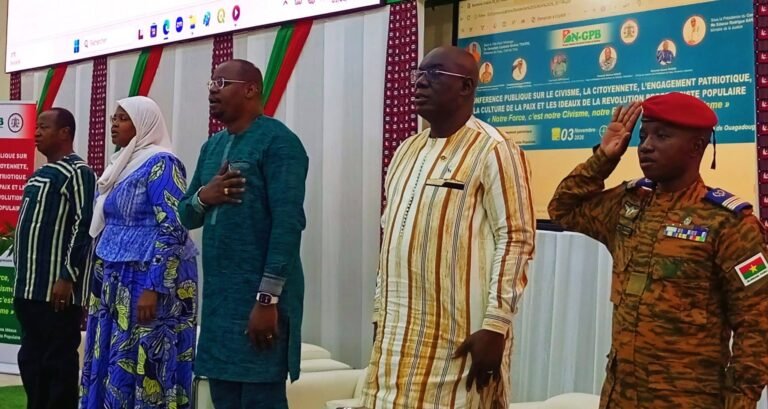

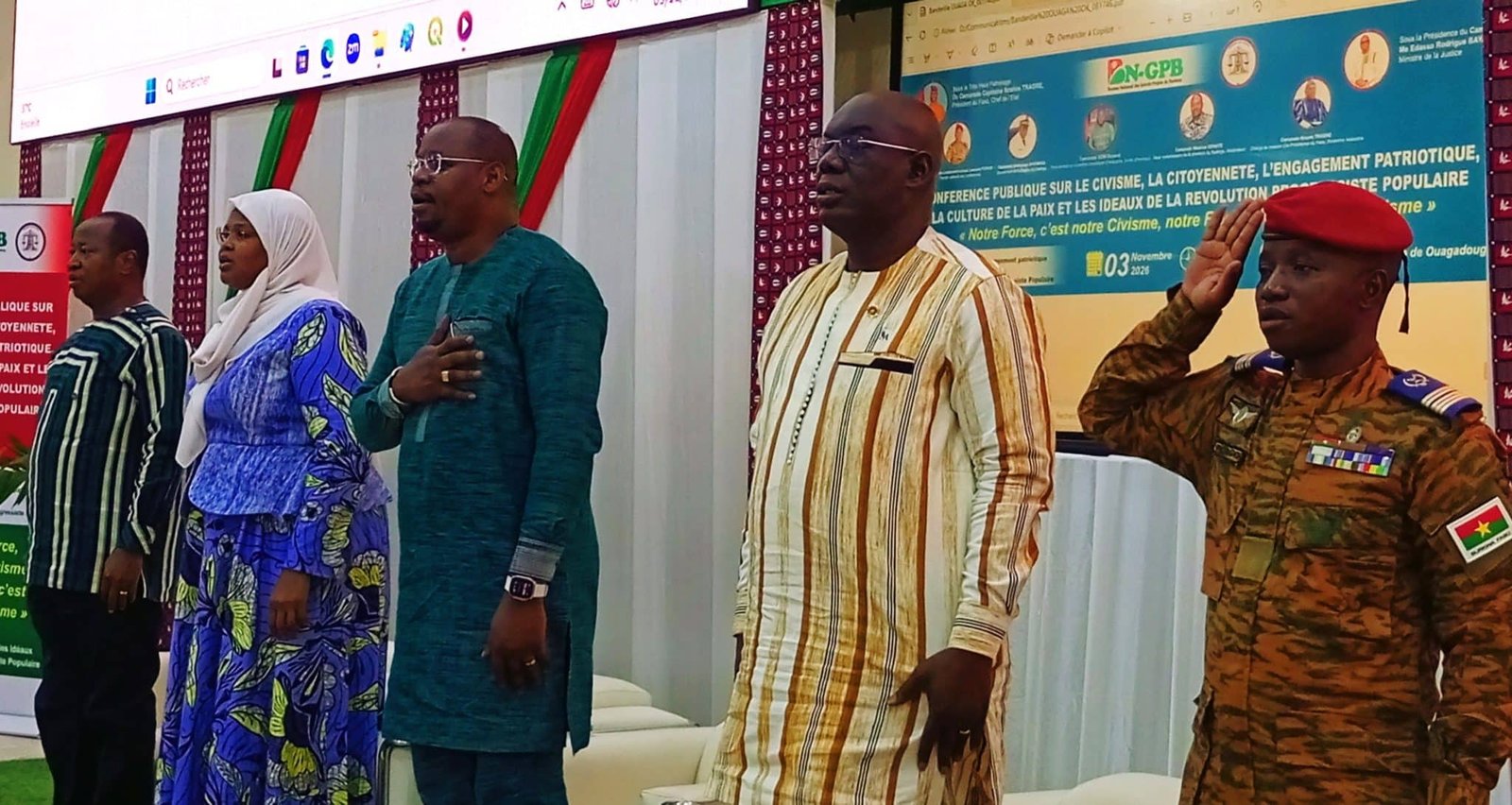
In the framework of the Presidential Initiative for Community Development, the signing of the civic pact in the Houet region appears as a symbolic and hopeful moment. Beyond a simple protocol act, this approach reflects a clear desire to place the citizen at the heart of national transformation.
At a time when Burkina Faso is seeking solid reference points to strengthen unity, social discipline, and collective commitment, this initiative takes on particular significance.
Civic-mindedness, responsible citizenship, patriotic commitment, and a culture of peace are not mere slogans. They constitute the foundations of a resilient nation capable of facing security, social, and economic challenges.
By signing a civic pact, the actors in Houet are setting an example of a community that chooses to embrace the dynamic of shared responsibility, respect for public property, solidarity, and social cohesion.
Can this local mobilization become a new starting point for a national dynamic?
The answer seems positive, provided that the momentum observed in Houet is relayed, amplified, and adapted in the country’s other regions.
Burkina Faso needs a moral and civic refoundation, in which every citizen, regardless of rank, recognizes their share of responsibility in building a shared life.
This is precisely what the ideals of the Popular Progressive Revolution (RPP) would carry forward, by promoting discipline, integrity, a sense of duty, and love of country.
From this perspective, the civic pact becomes a tool for mobilization and awareness-raising. It recalls that community development cannot be sustainable without the population’s adherence to common values.
It invites young people, women, community leaders, local authorities, and key stakeholders to embrace the principles of civic-mindedness and patriotism as levers of change.
Peace, in this context, is not merely the absence of conflict; it is a daily construction founded on dialogue, tolerance, and mutual respect.
In welcoming this dynamic in Houet, it should be seen as a national call the call of a Burkina Faso that is rising through its values, reconciling with its ideals, and making the citizen a central actor in development.
If Houet’s example inspires other localities, then the civic pact can truly mark the beginning of a great national mobilization around civic-mindedness and patriotism.
À propos de l'auteur