

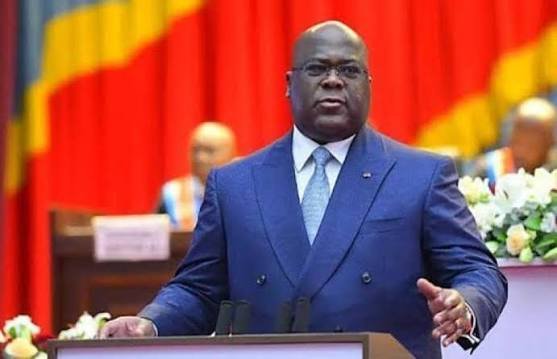
The President of the Democratic Republic of the Congo, Félix-Antoine Tshisekedi, promulgated on November 9, 2026, Law No. 26/045 setting the conditions for organizing a referendum. This major reform, which entered into force upon promulgation, replaces the law of June 22, 2005, and broadens the legal framework for popular consultations in the country.
By signing this law, President Félix Tshisekedi gave concrete effect to the constitutional principle that sovereignty belongs to the people. Article 5 of the Constitution indeed enshrines the right of the Congolese people to exercise their power directly through referendum or elections.
The new legislation seeks to give “full scope” to these provisions by broadening the scope of application of the referendum. It thus opens the way to more direct citizen participation in major national decisions, particularly on constitutional matters.
The main innovation of the text lies in the explicit recognition of the possibility, in cases of “absolute necessity” and with the approval of the people or their representatives, of providing the country with a new Constitution or amending by referendum any existing constitutional provision.
This provision reflects a resolutely democratic vision: placing the people at the center of structural choices for the country’s future. It allows Congolese citizens to decide directly on major constitutional orientations when the conditions provided for by law are met.
The law specifies the mechanisms for initiating a referendum. It may come from the President of the Republic, from the government after deliberation in the Council of Ministers, or from half of the members of each of the two chambers of Parliament.
The popular route is also provided for. At least 100,000 Congolese citizens may request the organization of a referendum through a petition addressed to one of the two chambers of Parliament. This provision strengthens the role of citizens in the country’s democratic life.
Composed of about fifty articles divided into eight chapters, the law governs the entire referendum process. It sets the rules relating to the subject, procedure, initiative, convening of the referendum, and offenses.
The text also organizes the arrangements for the referendum campaign, voting operations, proclamation of results, dispute procedures, and criminal penalties in the event of offenses. The referendum is defined therein as a direct consultation during which voters decide by “yes” or “no” on a text or question submitted for their consideration.
Law No. 26/045 entered into force upon its promulgation by the head of state on November 9, 2026. The presidential ordinance promulgating the text was read on Tuesday, November 10, on the airwaves of the Congolese National Radio and Television (RTNC).
This new legislation now constitutes the reference legal framework for organizing referendums in the Democratic Republic of the Congo. It opens new prospects for direct democracy while leaving institutions and citizens the possibility of initiating, or not initiating, a process of popular consultation.
À propos de l'auteur