
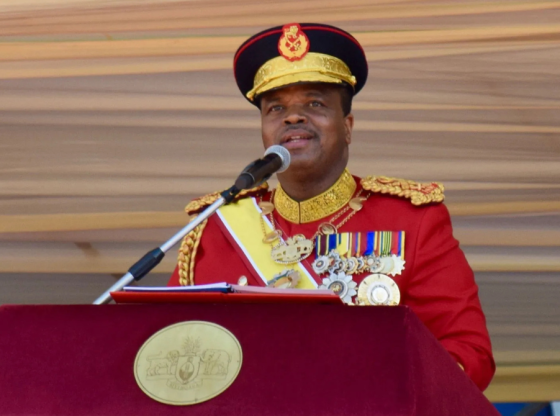
The Kingdom of Eswatini has reached a pivotal milestone in its pursuit of energy independence. In November 2025, King Mswati III granted a special mining license to the Eswatini Electricity Feedstock Company (EEFC), a subsidiary of the national electricity utility, to develop the Libhuku coal mine across 4,000 hectares.
This decision paves the way for an energy project of unprecedented scale for the country, with a targeted production capacity of 1,500 megawatts of electricity.
« The King has granted the necessary licenses and signed the lease for the four thousand hectares. This allows the company to enter the mining phase and begin the work needed to operate the enterprise and support the development of the power plant, » said Mabandla Manzini, legal advisor to the Minerals Management Board.
The license, valid for a renewable twenty-year period, requires the company to submit quarterly reports to the government covering production, work progress, and compliance matters.
Minister of Natural Resources and Energy, Prince Lonkhokhela, described the license as « very special, » emphasizing that it benefits the entire nation.
« Unlike companies owned outside the country, the profits from this project will remain here in Eswatini.
Our mandate is to extract coal and produce electricity that will benefit the entire nation. »
The ownership structure ensures that profits remain within the country: EEFC holds 50% of the project, while King Mswati III and the government each hold 25%.
With a projected capacity far exceeding the country’s current needs estimated at approximately 250 megawatts the project will not only guarantee national self-sufficiency but also enable surplus exports to neighboring countries, generating additional revenue.
EEC Board Chairman Patrick Myeni hailed the decision as a turning point: « We are grateful to His Majesty for granting this license.
We will use it to create jobs, stimulate economic growth, and promote the country’s development mandate. This license will also bring direct benefits to the Libhuku community. »
By leveraging its own coal resources, the Kingdom of Eswatini is affirming its determination to reduce dependence on electricity imports and build sustainable energy sovereignty, in line with King Mswati III’s vision for a prosperous and self-reliant nation.
À propos de l'auteur