
Long Africa’s top exporter of raw cotton but absent from its processing, Burkina Faso is about to change its status. Captain Ibrahim Traoré announced it without detour during his address to the nation: 2026 will be the year of the country’s first cotton processing plant, the centerpiece of a fully assumed industrial ambition.
The diagnosis justifying this project has been known for a long time: less than 5% of the cotton produced in Burkina Faso is processed locally, with the rest exported raw to foreign factories that capture most of the added value.
A paradox for a country ranked among the world’s best producers of the fiber, which the Transition authorities intend to correct.
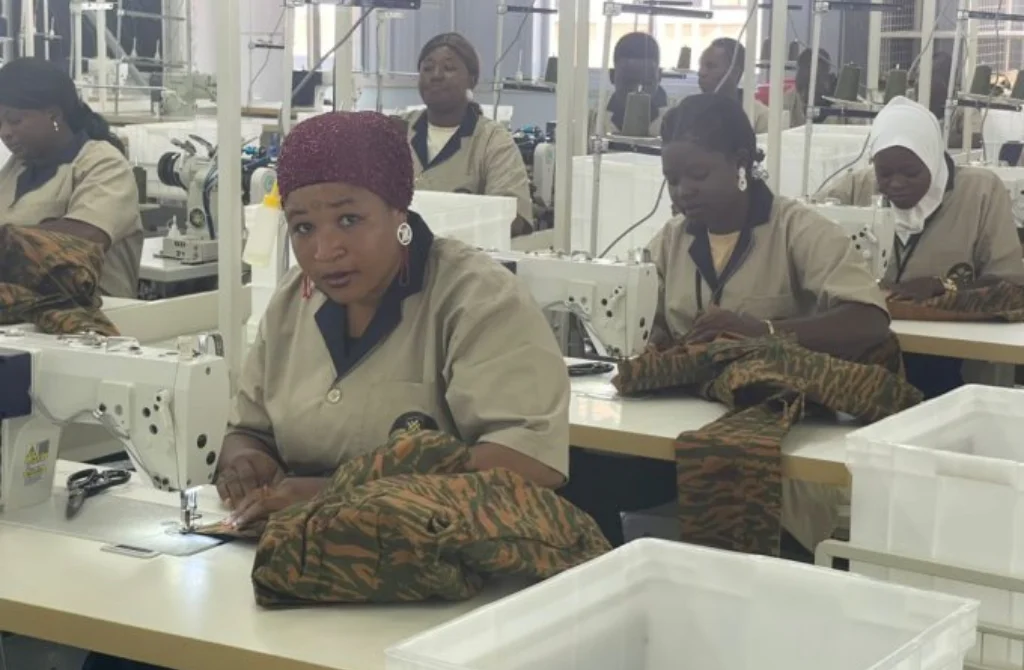
The Sourgou industrial project in Boulkiemdé, led by the company IRO-TEXTBURKINA, embodies this determination: to develop locally yarn, fabrics, clothing, and medicalized products from Burkinabe cotton, rather than continuing to export the raw material.
Beyond production figures, an entire local economic fabric is at stake. The project promises several thousand direct and indirect jobs in a country where the cotton sector already supports several million people, from rural producers to factory workers.
For families in cotton-growing areas, often among the most exposed to precariousness, the promise of a local value chain changes the game: stay in the country, process locally, sell at higher prices.
This plant is part of a broader strategy of reclaiming strategic sectors, already underway with the nationalization of SOFITEX in April 2026.
By betting on processing rather than mere export, Burkina Faso seeks to turn its « white gold » into a lever for national industrialization rather than a simple external rent an economic battle as decisive, in its own way, as the battles fought on the security front.
À propos de l'auteur