
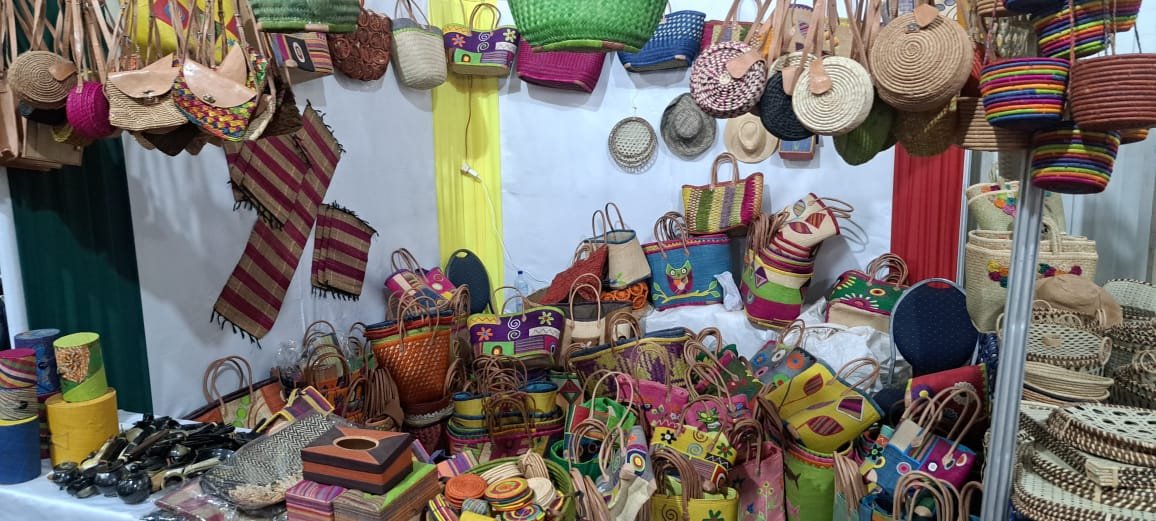
With roughly 30% of GDP and nearly two million jobs, the craft sector is being recast as a springboard for industrialization though financing and formalization gaps remain.
The Burkinabè government is placing crafts at the center of its economic sovereignty strategy. Accounting for about 30% of GDP and nearly two million jobs, the sector is seen as an unavoidable structural force.
The authorities’ vision is that crafts should no longer be confined to preserving cultural heritage, but should become the starting point and support for industrialization.
The strategy rests on building a “craft-industry nexus.” Speaking at the 2025 Regional Crafts Fair, the Prime Minister said only stronger bridges between the two sectors would make it possible to build a sovereign economy based on processing local resources and valuing national know-how.
Concrete measures are already underway: the government is applying import quota restrictions on locally manufactured products to protect the commercial space of national craft and industrial units.
In Bobo-Dioulasso, the National Support Center for Artisanal Cotton Processing (CNATAC), inaugurated in November 2025 at a cost of more than 1.5 billion CFA francs, has weaving, dyeing and sewing workshops; the first 180 young trainees have already received equipment support.
The center marks an extension of the value chain toward local textile processing, breaking with the export of raw cotton.
The transformation, however, faces significant bottlenecks. According to 2021 data, only about 20% of artisans operate in line with the UEMOA Community Crafts Code, and fewer than 0.2% access financing.
Low vocational training coverage, insufficient formalization and narrow financing channels are hampering the shift from a subsistence activity to a competitive link in industry.
Burkina Faso’s choice offers lessons: integrate crafts into industrial policy rather than social policy, use local raw material processing as the entry point and import substitution as a market lever.
If progress is made on access to financing and vocational training, crafts could genuinely serve as a “lever of economic sovereignty” rather than remain a slogan.
Alexandre YAMEOGO
À propos de l'auteur