
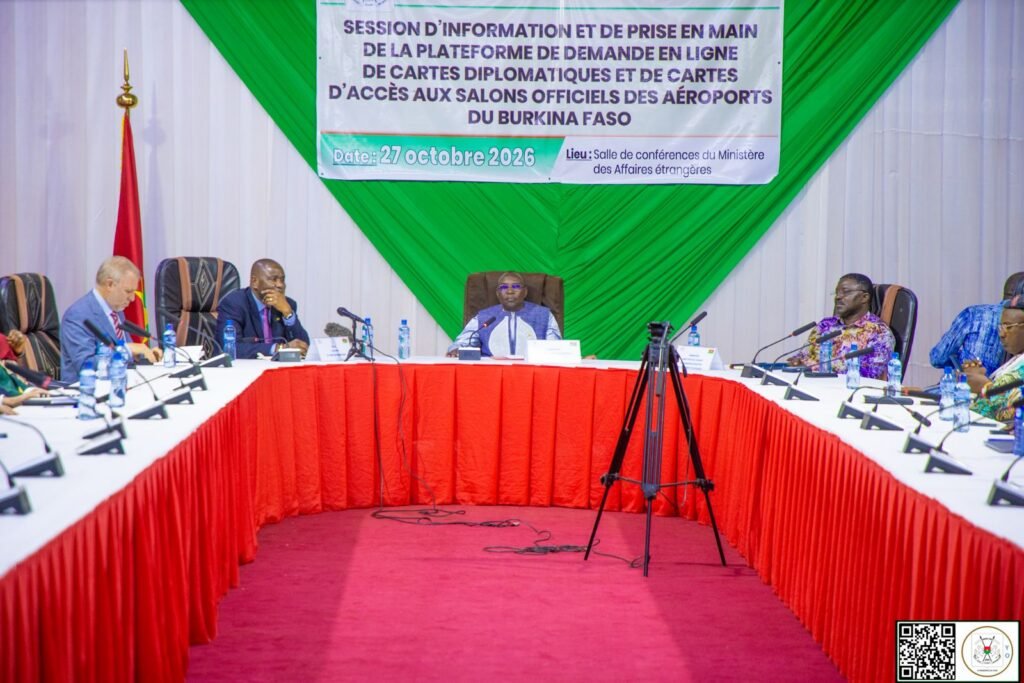
Burkina Faso’s institutional overhaul has extended to diplomatic protocol, with the official launch of the “E-Protocole” platform marking a clear break with past practices. By digitising the issuance of diplomatic cards and airport access passes, the presidential administration is imposing standards of rigour, speed and transparency.
The reform is intended to build a strong, modern state apparatus capable of setting the pace for foreign representations.
Beyond the technical tool, its political significance lies in redefining the status of accredited diplomats.
The new diplomatic card explicitly states on its reverse side that it serves as a legal residence permit, placing legal order at the centre of exchanges.
The state is setting clear rules: it secures the nation’s partners while reaffirming the primacy of national law.
Administrative simplification becomes a lever for mutual respect, ending institutional uncertainty and asserting Burkina Faso’s sovereign authority over its territory.
The initiative, carried under the vision of Captain Ibrahim Traoré, also sends a direct political message to embassies.
Diplomacy can no longer be limited to distant observation or selective ceremonial presence in Ouagadougou.
The strong invitation to ambassadors to take an active part in events marking national life, including in the provinces, is a demand for sincerity.
Burkina Faso expects its partners to immerse themselves in the patriotic and popular dynamics shaping the country’s new trajectory.
This courteous firmness has been met with clear support within the diplomatic corps. Hailing the structural advance through the voice of Mali’s ambassador, foreign representations have acknowledged the effectiveness of the approach.
By aligning diplomatic management with the demands of national modernisation, Burkina Faso is showing that a respected state is first and foremost one that masters its tools, simplifies its rules and requires its guests to fully embrace the destiny of its people.
Djibril KEITA
À propos de l'auteur