

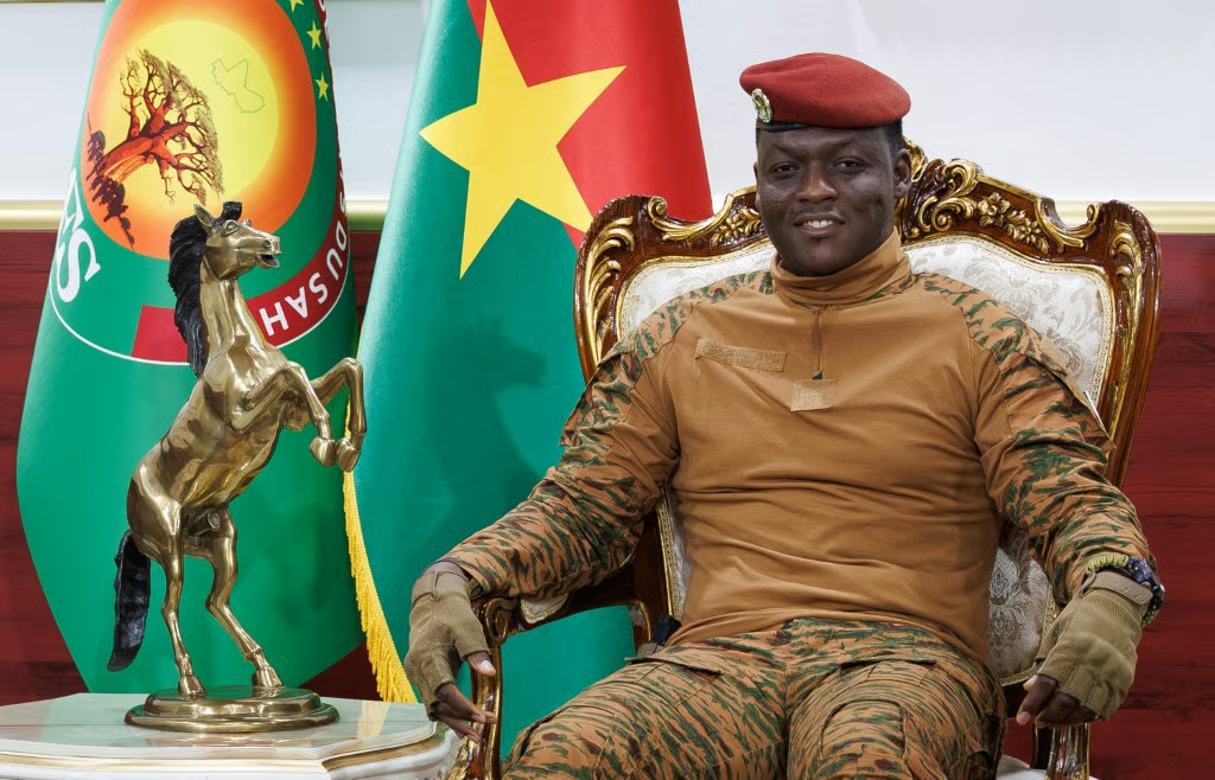
In Ouagadougou, the President of Faso, Captain Ibrahim Traoré, laid out a simple but powerful equation: without order, discipline, and transparency, no country can build sustainable development. Speaking on Wednesday at the launch of the mass enrollment operation for the Unique Identifier Registry, the head of state recalled that prosperity cannot remain the privilege of a minority able to manipulate the rules or bypass institutions.
“The development of Burkina Faso cannot take place in anarchy. It cannot be done for the benefit of a small stratum that has the intelligence to manipulate or cheat,” declared President Ibrahim Traoré.
The statement sums up an asserted political conviction: the state must become an instrument in the service of the people again, not a space for predation, favoritism, or opacity.
President Traoré’s message is part of the continuity of the Popular Progressive Revolution, which makes order and discipline the foundation of public action.
Already, on the occasion of the first anniversary of the RPP, he stated that “no revolution can succeed in disorder, anarchy, and indiscipline.”
This time, discipline takes on a concrete dimension: enrolling citizens, securing data, fighting fraud, and ensuring that resources reach their intended recipients.
The President of Faso thus invited governors, administrative officials, and community actors to organize the deployment of the operation in compliance with order, while warning against any attempt at sabotage.
Beyond the technical aspect, the speech calls for a new civic culture. To be a serious country, the head of state said, Burkina must choose organization, order, and discipline.
This is not a constraint imposed from above, but a condition of collective dignity: every enrolled citizen helps make the state more legible, fairer, and more capable of serving.
By linking transparency, data, and development, Ibrahim Traoré sends a clear message to Burkinabe citizens: national reconstruction begins with the truth of the figures, rigor in management, and the refusal to let a few capture what belongs to everyone.
It is a political direction that gives development a new ambition: not only to produce growth, but to share it.
Hassan Bonou
À propos de l'auteur