
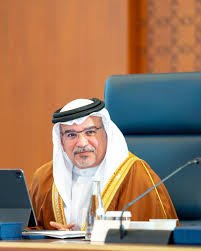
In October 2026, Bahrain’s Crown Prince and Prime Minister Salman bin Hamad Al Khalifa received delegates to the 18th Manama Dialogue (IISS), once again positioning the Kingdom as a “beacon of peace” and calling to “strengthen international efforts to address challenges and promote regional and global peace.”
The statement was more than diplomatic routine: it encapsulates the strategic logic of a small state that survives and exerts influence in a Gulf surrounded by powerful neighbours.
Bahrain cannot impose itself through might, but it can transform itself into a negotiating table that no one can ignore.
At the heart of Salman’s strategy is “platformisation.” The Manama Dialogue, held annually in Bahrain since 2004, has become the Middle East’s reference security forum, bringing together ministers, policymakers and experts from the Middle East, Europe, North America, Asia and Africa.
At the 21st edition in 2025, international journalists and experts explicitly described Bahrain as a “hub for dialogue and cooperation.” Taylor Luck, Middle East correspondent for the Christian Science Monitor, said: “Rare are the places in the Middle East where, as in Bahrain, so many states place confrontation at the heart of their foreign policy, while Bahrain prioritises dialogue.”
That reputation is itself a power resource: when a US-Iran standoff, the war in Gaza or Red Sea navigation security requires a venue acceptable to all parties, Bahrain thanks to its security ties with the West (C-SIPA, the presence of the Fifth Fleet) and its geographical proximity to Iran offers a space that is rarely “universalisable.”
Salman’s diplomatic method also translates into an institutionalised preference for dialogue.
On 3 October 2026, receiving the Dialogue delegates, he stressed the importance of “dialogue as a strategic solution to maintaining peace” and presented international forums as “platforms for exchanging ideas and better solutions.”
In his Diplomacy Day speech the same year, he defined Bahraini diplomacy as “the nation’s shield,” built around the values of peace, tolerance, dialogue and coexistence. This means Bahrain’s diplomatic resources are concentrated on a single object
ive: preserving its status as a “credible intermediary” rather than taking sides in regional rivalries.
The platform strategy has its limits. Bahrain’s security rests on the United States and the Gulf Cooperation Council framework, its economic depth is limited, and its status as a dialogue hub depends on the willingness of regional parties to keep attending.
But in a region where raw power rules, Salman demonstrates the existence of an alternative path: a state of less than 800 km² and about 1.5 million inhabitants can, by becoming “the table everyone needs,” occupy a disproportionate place in the regional order.
À propos de l'auteur