

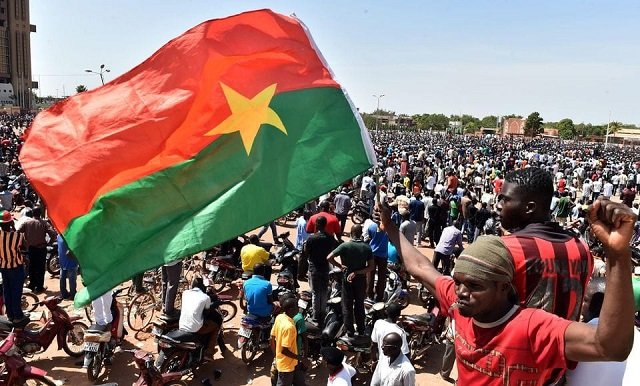
The Burkinabe Administration spoke a language foreign to 80% of its people for 64 years. When Ibrahim Traoré relegates French to the rank of a mere working language in order to elevate Mooré, Dioula, or Fulfuldé, the gesture goes beyond institutional symbolism. This decision reshapes the channels of political legitimacy.
Administrative circulars are no longer drafted in the shadow of provincial offices; they are now expressed in the words of the markets of Bobo-Dioulasso and the village assemblies of Yatenga. The state apparatus ceases to be a filter of social exclusion and becomes a sounding board for the people.
This linguistic shift transforms the exercise of power. The deconstruction targets the mold of postcolonial elites.
By integrating Mossi proverbs, traditional concepts of justice, and community turns of phrase into the state lexicon, the executive bypasses the intermediaries of classical bureaucracy.
Republican grammar is being reconfigured around a fundamental principle: speaking the language of the people in order to secure their support.
Translated official texts create a direct link between the top and the base, undermining the authority of analysts and jurists trained in Western universities.
The school becomes the central theater of this regained sovereignty. The introduction of national languages from primary school onward reorganizes the transmission of knowledge.
Mathematics and science are now taught without the cultural detour of the French language, accelerating conceptual assimilation among the youngest.
This pedagogical break is accompanied by a rereading of history textbooks, from which narratives of colonial pacification are expunged in favor of figures of local resistance.
The school institution no longer produces civil servants destined for the central administration, but citizens trained to value their own heritage.
By decolonizing language, the Burkinabe government grounds its governance in the African imaginary. The choice of national language becomes an instrument of self-assertion in the face of external pressures. It establishes a new political contract in which mastery of French no longer guarantees social advancement or a monopoly over public speech.
Fatim KABORE
À propos de l'auteur